
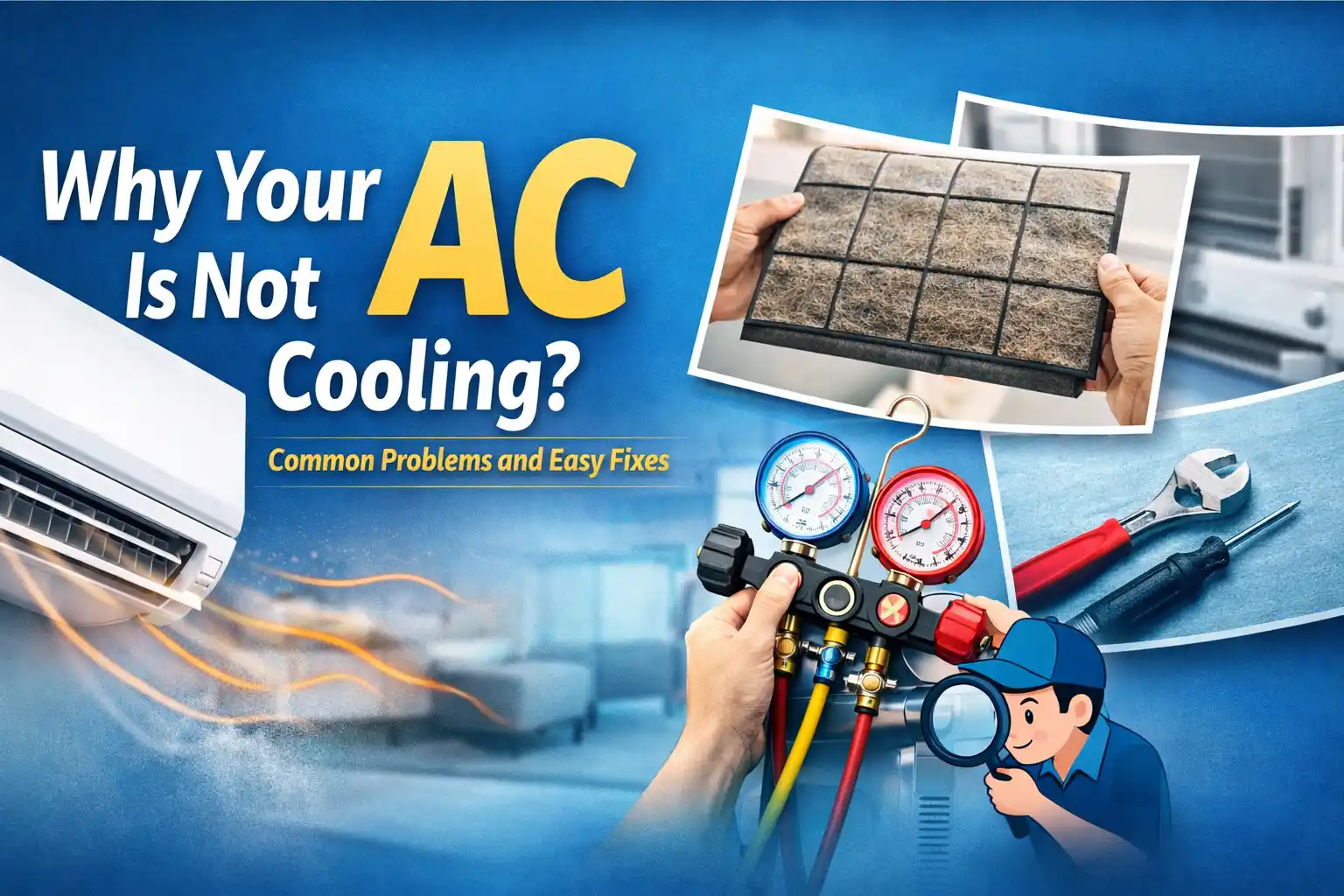
Why Your AC Is Not Cooling? Common Problems and Easy Fixes
Nothing’s worse than a scorching summer day when your air conditioner isn’t doing its job. If your AC is blowing warm air or failing to cool your home, it’s frustrating and it can drive up your energy bills. The good news? Most cooling issues are common, identifiable, and often fixable with simple steps.
Here’s a detailed guide to why your Air conditioner isn’t cooling and what you can do about it.
AC Not Blowing Cold Air
If your AC is running but the air isn’t cold, airflow issues, low refrigerant, or faulty components are often the cause. Prompt diagnosis prevents damage and restores proper cooling in your home.
Dirty or Clogged Air Filter
A clogged filter blocks airflow, reducing cooling efficiency. Cleaning or replacing the filter restores airflow, improves air quality, and ensures cold air is delivered effectively. Regular maintenance prolongs AC lifespan.
Low Refrigerant Levels
Low refrigerant prevents heat absorption, making the air warm. Professional inspection and refill restore cooling and prevent ice formation on coils.
Faulty Compressor or Condenser
Compressor or condenser failure reduces cooling output. Signs include weak airflow and high bills. Repair or replacement by a technician restores proper performance.
AC Leaking Water
Water leaks can damage floors and walls. Leaks usually result from blocked drains, frozen coils, or improper installation, requiring prompt attention to prevent further damage and mold growth.
Clogged Condensate Drain Line
A blocked drain line causes water backup. Cleaning restores proper drainage and prevents water damage.
Frozen Evaporator Coils
Ice buildup on coils melts and leaks water. Causes include restricted airflow or low refrigerant levels.
Improper Installation or Slope
Incorrect leveling or installation causes water pooling. Proper setup ensures efficient drainage and prevents leaks.
AC Making Strange Noises
Unusual AC noises often indicate mechanical or electrical issues. Rattling, squealing, or hissing requires inspection to prevent further damage and maintain efficient operation.
Loose or Worn Components
Loose screws or panels create rattling noises. Tightening or replacing parts restores quiet operation.
Fan or Motor Issues
Squealing or grinding noises often come from worn fans or motors. Lubrication or replacement restores smooth airflow.
Refrigerant Leaks
Hissing or bubbling sounds can indicate refrigerant leaks. Professional repair is needed to maintain cooling efficiency.
AC Not Turning On
AC may fail to start due to electrical issues, faulty thermostats, or broken components. Safe diagnosis is crucial to restore operation and avoid damage.
Tripped Circuit Breaker or Blown Fuse
Electrical overload prevents startup. Resetting the breaker or replacing the fuse can restore power safely.
Thermostat Problems
A faulty thermostat may fail to signal the AC. Replacing or re calibrating it restores proper function.
Faulty AC Capacitor or Contractor
Capacitor or contractor failure prevents startup. Professional repair ensures safe operation.
AC Running Constantly
An AC running nonstop wastes energy and indicates system inefficiency. Causes include thermostat settings, airflow restrictions, or low refrigerant. Proper troubleshooting restores normal cycling.
Thermostat Set Too Low
Setting the thermostat too low forces constant operation. Adjusting it prevents overuse.
Dirty Coils or Filters
Clogged filters or dirty coils reduce efficiency, forcing continuous operation. Cleaning restores normal function.
Refrigerant Leaks or Low Charge
Low refrigerant prevents the system from reaching temperature, causing nonstop running.
AC Producing Bad Odors
Foul smells indicate mold, stagnant water, or electrical issues. Addressing the source ensures safe, clean air circulation and improves indoor comfort.
Mold or Mildew in the System
Moisture in ducts promotes mold, creating musty odors. Cleaning eliminates this.
Clogged Drain Pan or Filters
Stagnant water or dust buildup causes odors. Cleaning or replacing components resolves the issue.
Electrical Burning Smell
Burning smells indicate overheating components or wiring. Immediate professional inspection is necessary.
AC Causing High Energy Bills
Rising energy bills often indicate inefficiency due to maintenance issues, leaks, or aging systems. Fixing underlying problems reduces costs and improves AC performance.
Dirty or Clogged Filters
Clogged filters make the AC work harder, increasing electricity use. Cleaning restores efficiency.
Aging AC System
Older AC units consume more power. Upgrading improves energy efficiency and reliability.
Leaky Duct work
Air leaks in ducts reduce cooling and increase energy bills. Sealing restores efficiency.
AC Tripping Circuit Breaker
Frequent breaker trips usually indicate electrical overload or faulty components. Addressing the cause prevents hazards and system damage.
Overloaded Electrical Circuit
Shared circuits can overload and trip breakers. Dedicated circuits prevent this.
Faulty Compressor or Motor
Malfunctioning components draw excess power, tripping the breaker. Repairs restore safe operation.
Short Circuit or Wiring Issues
Damaged wiring can repeatedly trip breakers. Professional repair is essential.
AC Freezing Up
Frozen coils reduce efficiency and may damage the system. Causes include low refrigerant, restricted airflow, or faulty fans. Timely action prevents further problems.
Low Refrigerant Levels
Low refrigerant causes ice on coils. Recharging restores proper cooling.
Restricted Airflow
Dirty filters or blocked vents reduce airflow, leading to freezing. Cleaning fixes the problem.
Faulty Blower Fan
A malfunctioning fan cannot circulate air over coils, causing ice buildup.
AC Short Cycling
Short cycling occurs when the AC turns on and off too frequently, stressing components and reducing efficiency. Causes include oversized units, thermostat issues, or refrigerant problems.
Oversized AC Unit
An oversized AC cools quickly but shuts off prematurely, creating repeated cycles. Proper sizing prevents this.
Thermostat or Sensor Problems
Faulty sensors or thermostats can trigger premature cycles. Recalibration or replacement fixes the problem.
Electrical or Refrigerant Issues
Low refrigerant or component failure can cause frequent cycles. Professional repair restores proper operation.
Conclusion
A malfunctioning AC can make your home uncomfortable, but most cooling issues are easy to identify and often simple to fix. From replacing a dirty filter to checking thermostat settings or sealing ducts, you can restore your AC’s cooling performance and save energy.
Tip: If DIY fixes don’t work, don’t wait call a professional to prevent costly repairs. For optimal performance, consider keeping a seasonal AC maintenance checklist handy.
Freaquntly Asked Questions
Why is my AC running but not cooling?
Your AC may be running without cooling due to a dirty air filter, low refrigerant, or a faulty compressor.
How can I fix my AC leaking water?
Water leaks are often caused by a clogged condensate drain, frozen evaporator coils, or improper installation.
What causes strange noises from my AC?
Rattling, squealing, or hissing sounds usually come from loose components, fan or motor issues, or refrigerant leaks.
Why does my AC keep running constantly?
An AC running nonstop may have thermostat settings that are too low, dirty coils or filters, or low refrigerant.
How do I prevent my AC from freezing?
AC freezing is usually caused by low refrigerant, blocked airflow, or a faulty blower fan. Regular filter cleaning, proper airflow, and timely refrigerant refills prevent coil freezing.
Why is my AC short cycling?
Short cycling occurs when an AC turns on and off repeatedly.
How often should I maintain my AC to avoid these problems?
AC maintenance should be done at least twice a year, ideally before summer and winter.




Add comment